DVIS II: Next-Gen Local Channel Insertion

Residents of apartment buildings, retirement facilities, MDUs and enterprise campuses rely on locally inserted television channels for property information, lobby feeds and local news. Delivering that service used to mean inserting a channel into a QAM multiplex. As the industry transitions to IP, the infrastructure is changing, but the need isn’t. DVIS™ II keeps local insertion working through that transition, across QAM and IP environments simultaneously.
Where it's used

Any communal or multi-unit environment where your team needs to insert locally generated content into a channel lineup alongside the main programming feed.

Light Blue Blocks with Orange Icons

MDUs & apartment buildings

Property management channels, building announcements and lobby camera feeds inserted into the channel lineup for all residents — delivered to QAM set-top boxes, IP devices, or both.

Retirement & senior living

Community notices, activity schedules and local information that residents depend on, maintained as a dedicated channel even as you migrate the underlying video infrastructure to IP.

Enterprise campuses

Corporate communications, lobby feeds and internal broadcast channels delivered across large campus environments — ingested from cameras and local sources, distributed across the IP or QAM network.

Hospitality

Property information channels, welcome content and local feeds inserted into the guest room channel lineup — manageable remotely without on-site visits for every update.

The transition problem it solves

Most commercial accounts currently served with local insertion have QAM-based infrastructure — set-top boxes that receive content from a QAM plant. As you migrate those accounts to IP, the channel insertion equipment needs to change too. But properties don’t switch over all at once. A building might have a mix of legacy QAM set-top boxes and new IP devices for years before the transition is complete.

Running separate insertion systems for QAM and IP during that period is expensive and operationally complex. DVIS II handles both from a single platform. The edge encoder outputs to QAM and IP simultaneously, so you can support mixed environments without maintaining parallel infrastructure. When a property eventually completes its transition to IP, the same encoder continues to serve it.

How the platform works

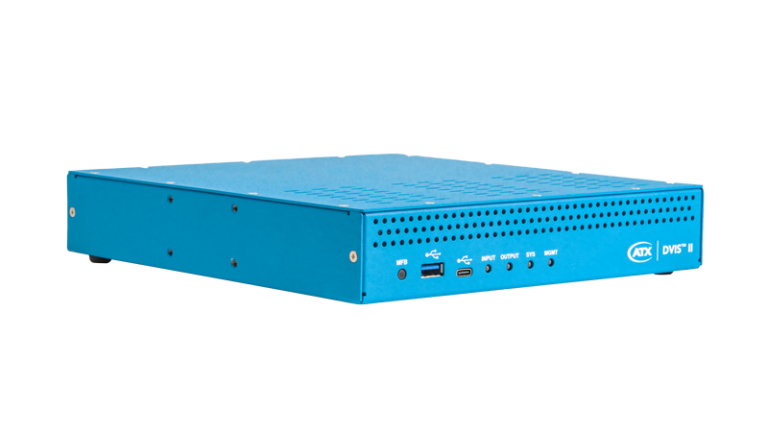
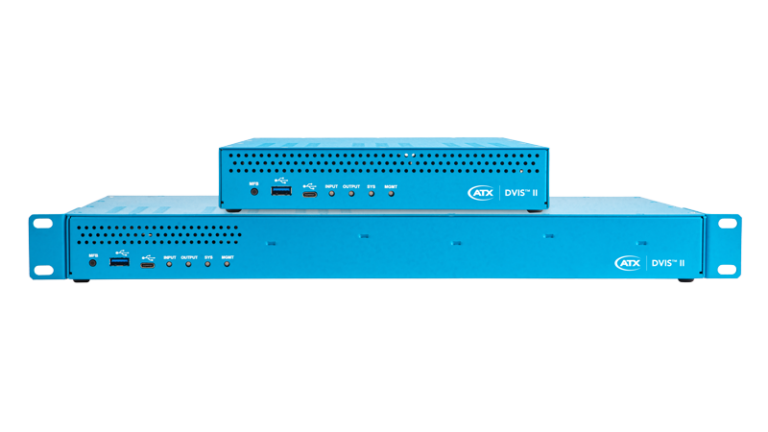
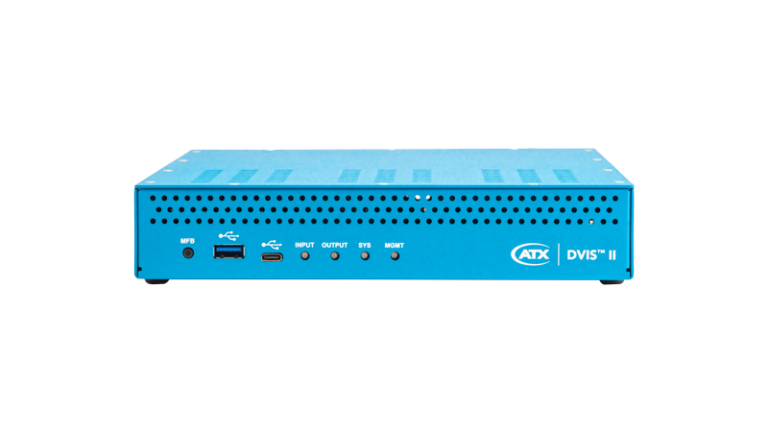
DVIS II is a two-component system. A compact edge encoder sits on the property. A software-based Enhanced Origin Server handles stream management and delivery for IP endpoints. Visium Manager connects and manages both remotely.

Background Image Blocks

On premises

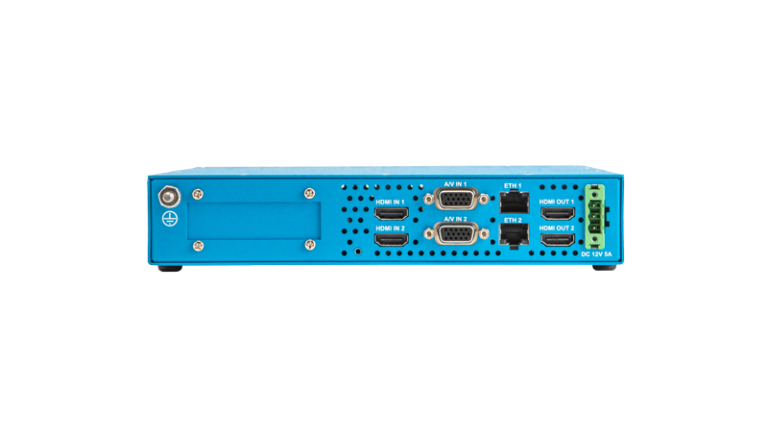
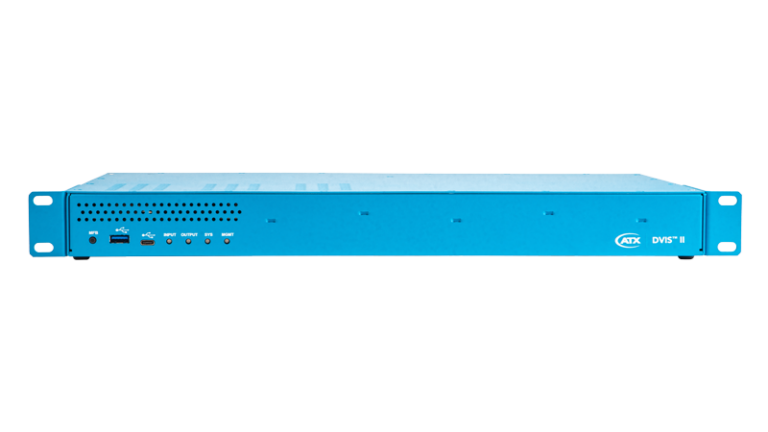
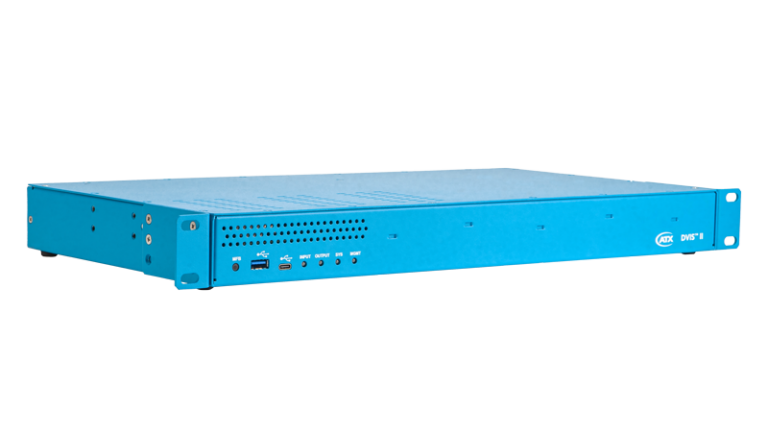
DVIS II Edge Encoder:
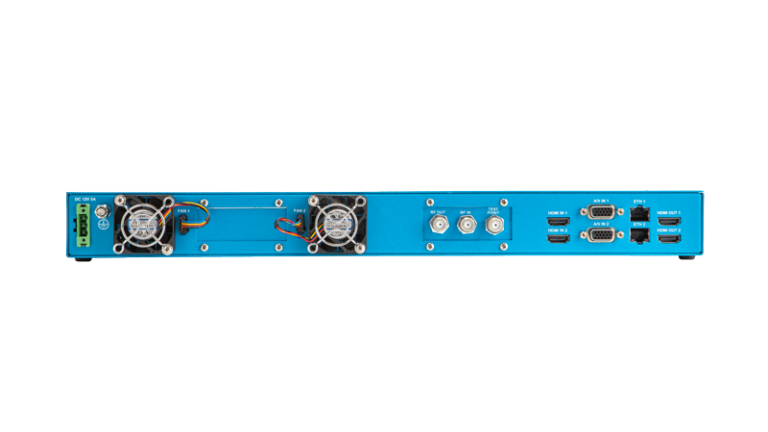
Ingests baseband video from cameras and local sources via HDMI or component inputs, or directly from IP cameras via RTSP. Encodes to MPEG-2, H.264, or H.265 at up to 1080p60, creates CMAF-segmented streams and transmits to the Enhanced Origin Server on demand to conserve upstream bandwidth. For properties with legacy QAM STBs, it optionally outputs QAM simultaneously, including add-drop mode to replace a single program in an existing multiplex.

Hosted anywhere

Visium Enhanced Origin Server:
Software application that ingests CMAF streams from edge encoders, creates low-latency ABR profiles in real time and hosts streams for IP endpoint delivery, supporting DASH, HLS and MSS outputs. Includes custom end-client authentication so locally inserted content is only accessible to the right accounts. Can be hosted in the operator’s own datacenter, on ATX’s managed cloud, or on a local server at the property.

Central management

Visium Manager:
Remote monitoring, configuration and firmware upgrades for every edge encoder and the Enhanced Origin Server from a single platform — the same management environment used across gateways and SBBs. Scales to thousands of deployed encoders without additional management infrastructure.


previous arrow
Small & Medium Business

Multiscreen venue management

Running multiple televisions in a commercial space — a sports bar, a restaurant, a gym — sounds simple. In practice, it means a drawer full of remotes, screens that fall out of sync during the moments that matter most and no way to change what’s on without walking the floor.

Visium Venue changes that. One platform gives you complete control over every screen in your venue, from a single app.

next arrow

Key capabilities

Background Image Blocks

QAM and IP simultaneously

Outputs to both QAM and IP in parallel from a single encoder, supporting properties with a mix of legacy RF set-top boxes and IP devices without separate systems.

1 or 2 channel encoding

Each edge encoder handles 1 or 2 channels simultaneously, with single or multi-profile encoding per channel for adaptive bitrate delivery to IP endpoints.

On-demand transmission

Streams are sent to the Enhanced Origin Server on demand rather than continuously, preserving upstream bandwidth in MDU and commercial deployments where backhaul is shared.

End-client authentication

Locally inserted streams are only accessible to end clients associated with the correct accounts, not to anyone else on the same network segment.

Managed service option

ATX offers a managed service deployment option for operators who want to offload the operational overhead of running the Enhanced Origin Server and managing the encoder fleet.

Part of the Visium platform

DVIS II is managed through Visium Manager alongside the rest of the Visium product family, giving you a single management environment across gateways, room devices and edge encoders.

Related Insights

Transitioning Channel Insertion Services from QAM to IP

Learn how MSOs can increase customer loyalty and reduce operational costs by migrating this critical business service to IP.

Download eBook

ATX’s Next-Gen IP-Based Local Channel Insertion Solution Now Generally Available

DVIS II platform assists MSOs in preserving critical customer service as they transition commercial video to IP.

Read Press Release

Optimizing Channel Insertion for an IP World

Learn how local channel insertion is rising in importance, with IP and emerging tech helping providers cut costs, boost loyalty, and maximize value.

Watch Webinar

Local Channel Insertion

Explore ATX's innovative encoding and digital insertion solutions that simplify the addition of local content into commercial TV services.

Download Solution Brief

Cable Transition to IP Won’t Leave MDU Services Behind

ATX’s VP of Media Gateway Products, Linas Underys, discusses how MSOs can benefit by simplifying feed insertion to meet MDU needs in their move to IP.

Read Article

ATX Networks boosts MSO local channel insertion tech for bulk MDU, lobby feeds

Smart Buildings Technology discusses ATX’s new IP-based local channel insertion platform that enables adding local content into television lineups.

Read Article

ATX Networks Introduces Next-Generation Local Channel Insertion Solution

ATX debuts new IP-based local channel insertion platform at Cable-Tec Expo 2022 as a convenient and cost-efficient approach for MSOs converting to IP.

Read Press Release


Request Sales Call Back